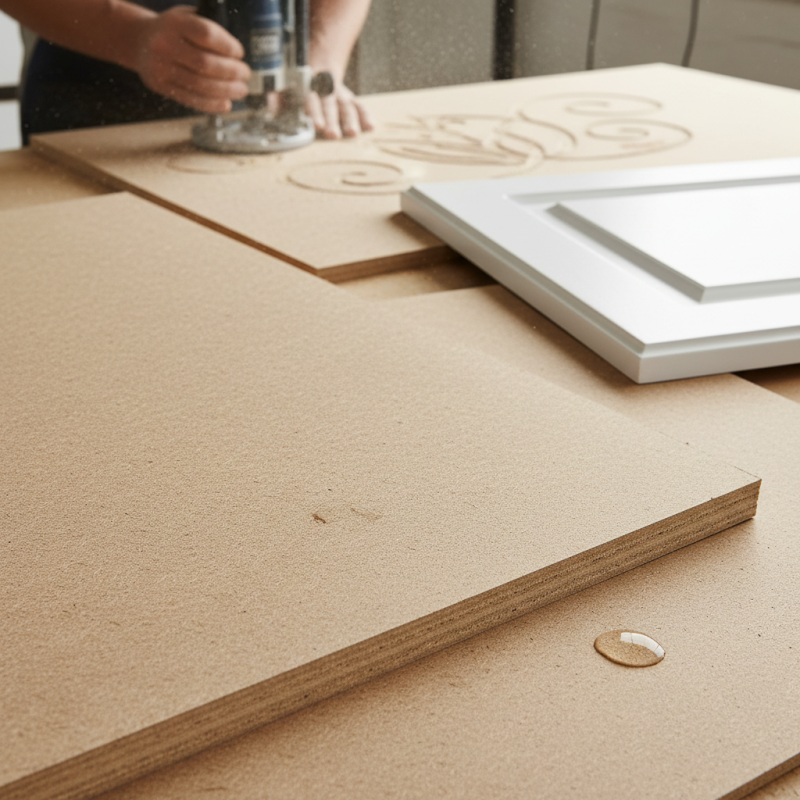
Why Choose Fiberboard Medium Density Board for Your Projects?
Fiberboard Medium Density Board (MDF) has become a popular choice for various projects. This material combines durability, versatility, and aesthetic appeal. Many professionals in woodworking and construction prefer MDF for its unique properties.
MDF is easy to work with, making it suitable for intricate designs and furniture. Its smooth surface allows for excellent finishing, which is appealing in home decor. However, not all projects require MDF. We should assess the needs carefully before choosing it.
While Fiberboard Medium Density Board offers numerous benefits, its moisture resistance is a concern in certain conditions. Understanding its limitations is crucial for making effective design choices. This balance between advantages and drawbacks defines our approach to using MDF.
What is Fiberboard Medium Density Board and Its Composition?
Fiberboard Medium Density Board (MDF) is a popular choice in construction and furniture design. This engineered wood product is made from wood fibers, wax, and resin. The composition involves breaking down wood into small fibers, which are then combined under heat and pressure. This process results in a dense, durable board that maintains a smooth finish.
The unique properties of MDF make it versatile. It is easy to shape and cut, allowing for intricate designs. Carpenters and designers appreciate its ability to hold paint and veneers well. However, it is important to acknowledge some shortcomings. MDF can be susceptible to moisture damage if not sealed properly. Its weight may also pose challenges during installation. Despite these drawbacks, MDF remains a reliable choice for many projects. Its balance of affordability, stability, and adaptability continues to make it an essential material.
Why Choose Fiberboard Medium Density Board for Your Projects?
This bar chart illustrates the key attributes of Fiberboard Medium Density Board compared to other common materials used in construction and furniture making. The attributes include durability, cost-effectiveness, weight, and ease of use.
Key Advantages of Using Fiberboard Medium Density Board in Projects
Fiberboard medium density board (MDF) has gained popularity due to its unique properties. It consists of wood fibers bonded under heat and pressure. This process creates a dense, stable material that resists warping. MDF is easy to work with, making it an excellent choice for various projects, from furniture to cabinetry.
One of the key advantages of MDF is its smooth surface. This feature allows for flawless painting and veneer applications. The lack of knots or grain imperfections ensures a uniform finish. Additionally, MDF can be cut and shaped easily, accommodating intricate designs. However, it requires extra care around edges, as they can be more prone to damage.
Sustainability is another aspect that deserves attention. Many wood fibers used in MDF come from recycled materials. This reduces waste and supports environmental efforts. Yet, one must be cautious about the adhesives used in production. Some can release harmful VOCs, impacting indoor air quality. Choosing low-emission products can help mitigate this issue.
Why Choose Fiberboard Medium Density Board for Your Projects? - Key Advantages of Using Fiberboard Medium Density Board in Projects
| Advantage | Description | Applications |
| Versatility | Can be used for furniture, cabinetry, and decorative panels. | Residential and commercial projects. |
| Smooth Surface | Provides a perfect base for painting and laminating. | Ideal for high-quality finishes. |
| Cost-Effective | Lower price point compared to solid wood and other materials. | Budget-friendly projects. |
| Eco-Friendly | Made from recycled wood fibers, reducing waste. | Sustainable building practices. |
| Ease of Use | Easy to cut, shape, and install with standard tools. | Do-it-yourself projects and professional installations. |
Common Applications of Fiberboard Medium Density Board in Construction
Fiberboard medium density board (MDF) has become a popular choice in the construction sector. Its versatility makes it suitable for various applications. Many builders select MDF for cabinetry, furniture, and decorative wall panels. According to a report by the U.S. Forest Products Laboratory, MDF is favored due to its smooth surface and ease of machining.
MDF is not only user-friendly but also offers sound insulation properties. It effectively minimizes sound transmission, making it an excellent choice for interior walls and floors. This feature aligns with findings from the National Wood Flooring Association, which emphasize the importance of acoustic performance in residential and commercial spaces. Builders appreciate this quality, especially in multifamily housing.
Tip: When working with MDF, use proper ventilation and dust masks. It contains fine particles that can be harmful when inhaled. Additionally, cutting or sanding can generate dust that needs to be managed carefully. Engaging a professional for large installations can prevent potential mishaps.
Despite its advantages, MDF can absorb moisture, which may lead to warping. Ensuring adequate sealing when using MDF in areas prone to humidity is essential. Contractors should also consider its weight, as it can be bulkier than alternatives. Balancing these factors helps in maximizing MDF's potential in any project.
Comparative Analysis: Fiberboard vs. Other Types of Boards
When comparing fiberboard medium density boards to other types of boards, one must consider their unique characteristics. Fiberboard typically offers superior acoustic performance. According to industry reports, fiberboard can reduce noise transmission by up to 90%. This quality makes it ideal for residential and commercial projects where sound insulation is vital.
Additionally, fiberboard exhibits impressive thermal properties. It can help maintain indoor temperatures, reducing energy consumption. Studies indicate that buildings utilizing fiberboard can save approximately 15% on heating costs. This advantage is crucial in regions subjected to harsh climates.
Nonetheless, fiberboard has limitations. Its moisture resistance is not as strong as plywood or OSB. In damp environments, fiberboard may swell or deteriorate. This factor requires careful consideration during project planning. The decision ultimately rests on a balance between desired performance and potential vulnerabilities.
Tips for Selecting and Working with Fiberboard Medium Density Board
Fiberboard medium density board (MDF) is a popular choice for various projects, especially in furniture and cabinetry. Understanding how to select and work with it can greatly enhance your outcomes.
When choosing MDF, consider its density and thickness. A denser board provides better durability but might be heavier. On the other hand, thinner boards can be easier to handle but may not withstand heavy loads. Always assess your project requirements before making a decision.
While working with MDF, use sharp tools to create clean edges. The fibers can fray easily if you don’t cut carefully. Also, wear a mask. MDF produces fine dust when cut, which can be harmful if inhaled. Finally, don’t forget to seal the edges. Unsealed edges can absorb moisture and lead to swelling. Each step can lead to a more successful project, but careful attention is crucial.